Introduction
This weekend, a significant AI news story shook both sides of the Pacific, even catching the attention of Elon Musk.
Yesterday, the AI programming tool Cursor launched its “own” model, Composer 2.
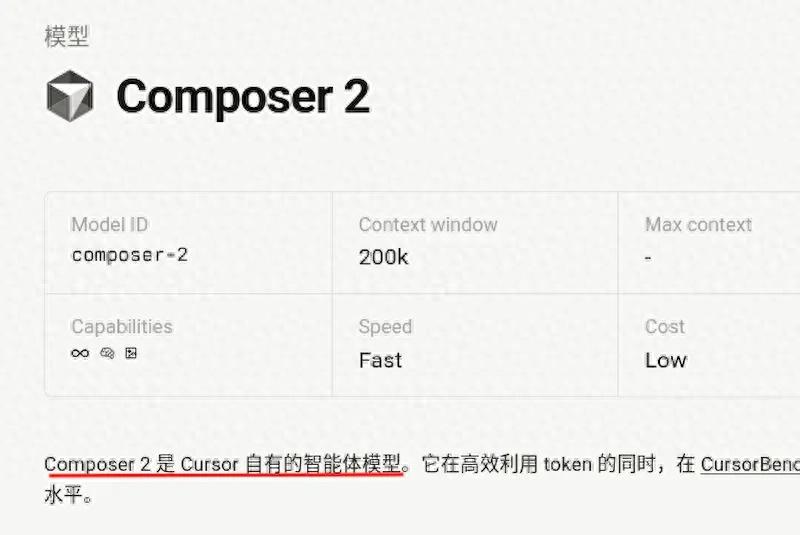
The official website still claims it is a “self-developed model.” Since the release of Composer 1 in October 2024, there have been ongoing suspicions that it is a shell model based on a Chinese model, but evidence was lacking.
Now that Composer 2 has arrived, many are investigating what model lies behind it. Is it truly Cursor’s own?
Cursor implemented several restrictions to prevent reverse engineering, but a foreign user, @fynnso, discovered a loophole. In the previous version, a certain action was prohibited, but in this version, it was executable.
First, you set up a server to act as an interface for calling the AI model. It doesn’t matter if you have a model; as long as it can receive client requests, you’re good to go. Then, in your local Cursor setup, you configure the model to be Composer 2, pointing to the URL of your newly set up server. This way, Cursor will send requests to your server, revealing what model it is actually requesting.
The truth was exposed: it requested the model ID kimi-k2p5-rl-0317-s515-fast.
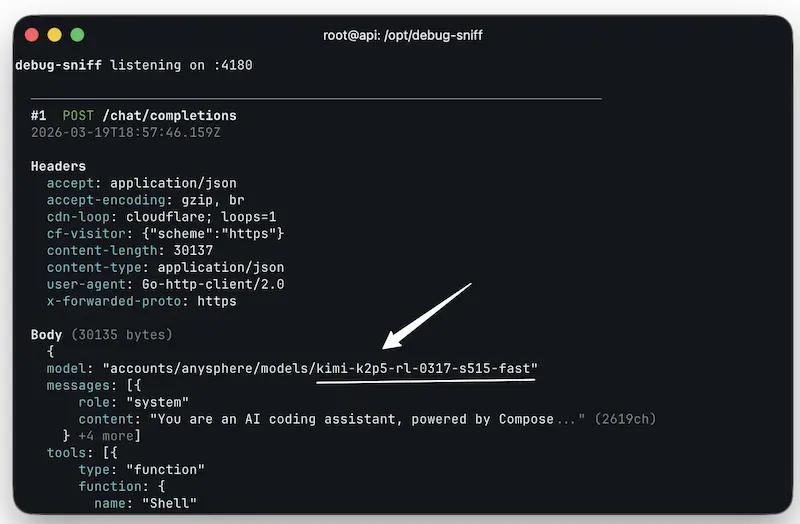
The Revelation
This user shared the screenshot online, sparking a frenzy. Observers quickly recognized this as solid evidence that Composer 2 is essentially a shell of Kimi K2.5.
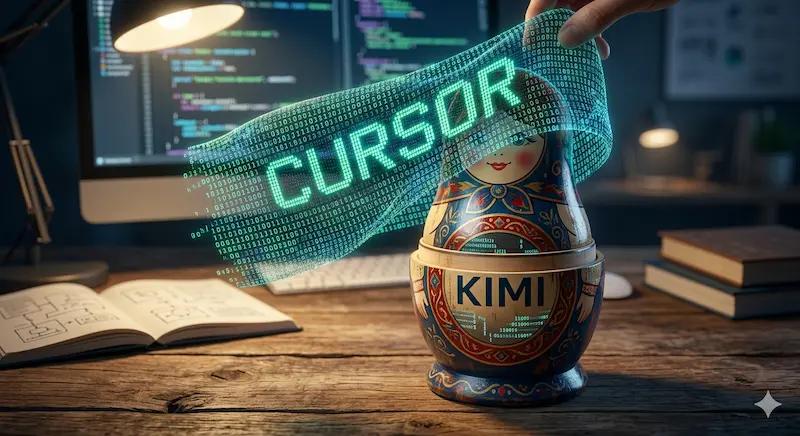
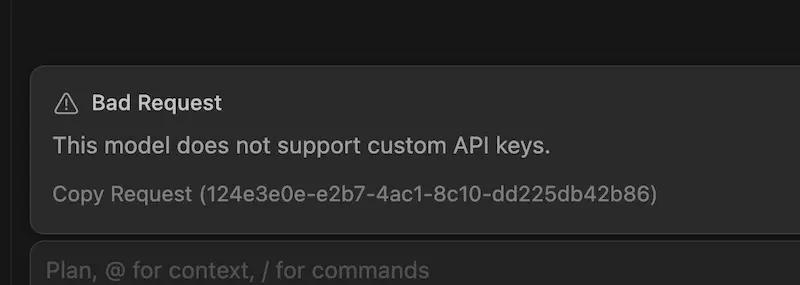
Ironically, as the news broke, Cursor swiftly patched the loophole, making it impossible to replicate the request.
However, it was too late; the information spread widely, and even Musk tweeted: “It’s Kimi K2.5.”

This has now become an open secret that can no longer be concealed.
Legal Implications
Attention quickly shifted to whether Cursor had violated any copyright. Although Kimi K2.5 is an open-source model, it operates under a modified MIT license.
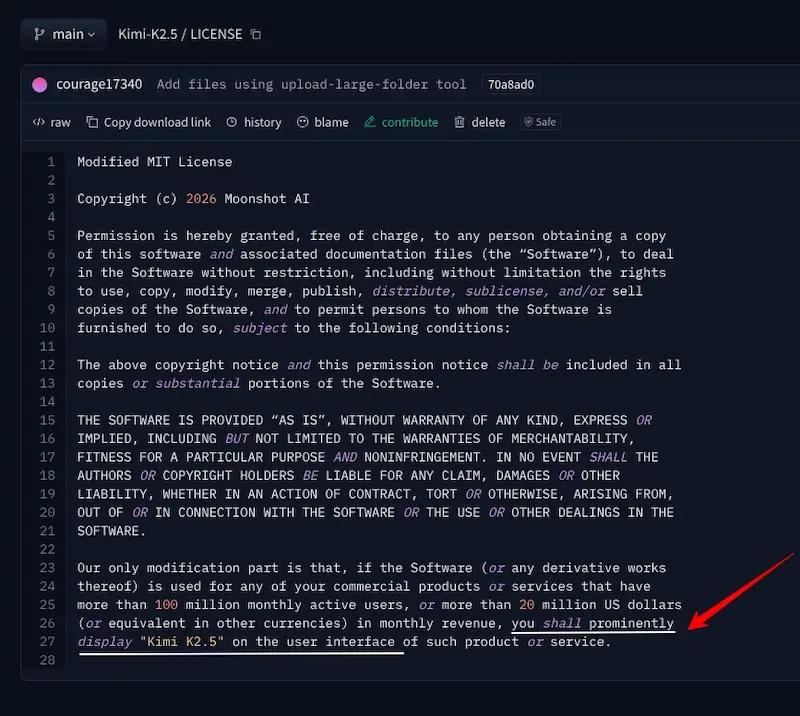
The license states that you can use the model freely, but if your commercial product exceeds 100 million monthly active users or $20 million in monthly revenue, you must prominently disclose that you are using Kimi K2.5.
Cursor’s latest reported annual revenue is $2 billion, equating to approximately $167 million monthly, clearly meeting the above criteria. However, it concealed the fact that it was using K2.5.
As the assumption of copyright infringement gained traction, a representative from Cursor finally spoke out.
He acknowledged that they indeed used Kimi K2.5 but claimed they were not infringing, as their license came from a partner, Fireworks AI.
Shortly after, Kimi’s official account also tweeted.
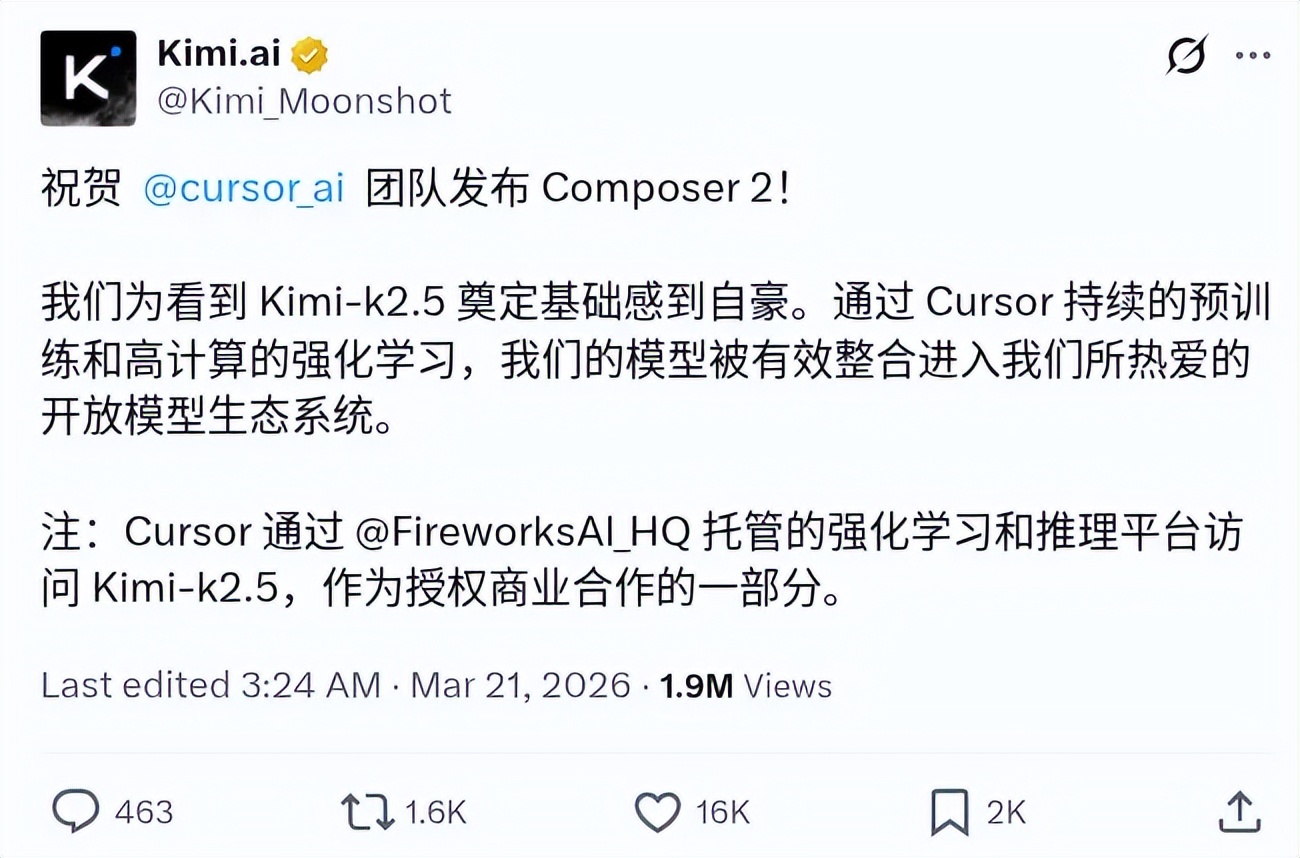
Kimi confirmed that Cursor had obtained authorization from Fireworks AI, a Silicon Valley-based Chinese AI company that specializes in fine-tuning and reinforcement learning. Fireworks AI received authorization from Kimi to retrain the model and then sublicensed it to Cursor.
Conclusion
At this point, it is clear that Cursor did not violate Kimi’s licensing terms and thus is not infringing.
If that is the case, why did Cursor go to such lengths to hide this fact? Why not openly acknowledge providing a modified version of Kimi K2.5?
I suspect the reason is tied to Cursor’s rapidly inflating valuation. Bloomberg reported this month that Cursor is in the process of raising funds, with a valuation reaching $50 billion.
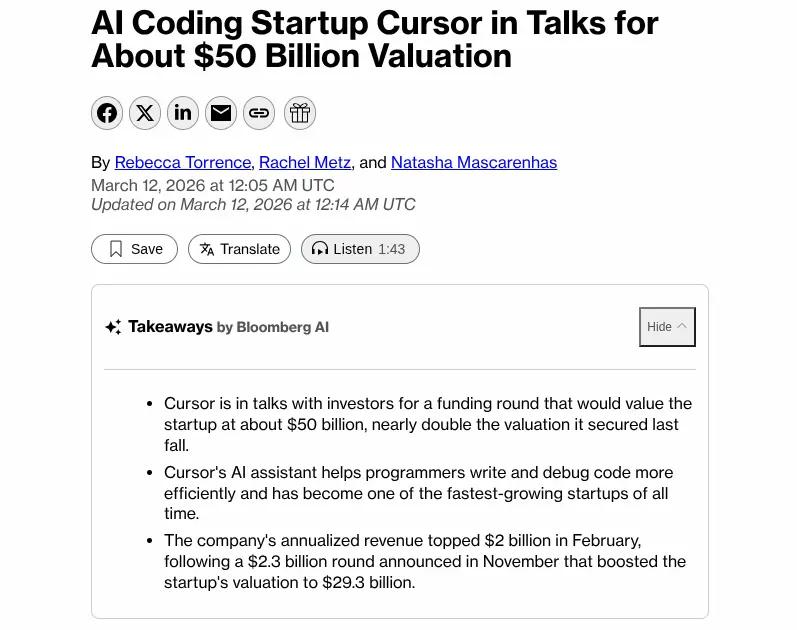
Do you know what its previous valuation was?
In October 2023, when Cursor was founded, its valuation was $50 million; by August 2024, during its Series A funding, it had risen to $400 million; by December, it skyrocketed to $2.6 billion; and by November 2025, the latest round of funding had reached $29.3 billion.
As seen, the valuation doubles every few months. This rocket-like growth needs performance support, yet it is merely a modified version of VS Code, utilizing open-source technology.
To sustain such a high valuation, it has a motive to present itself as a large model company with model development capabilities rather than just an AI tool.
This, I believe, is the main reason it was reluctant to disclose its use of Kimi K2.5.
Final Thoughts
In this entire event, Cursor is undoubtedly the loser, while Kimi emerges as the winner, gaining significant exposure.
When Cursor released Composer 2, it disclosed performance and cost comparisons. Composer 2’s performance is lower than GPT-5.4 but higher than Opus 4.6.
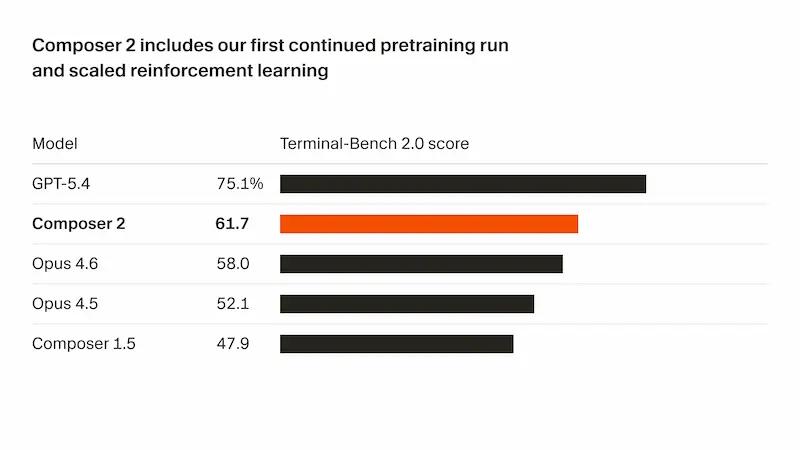
However, its generation speed is faster than both GPT-5.4 and Opus 4.6, and its costs are the lowest.
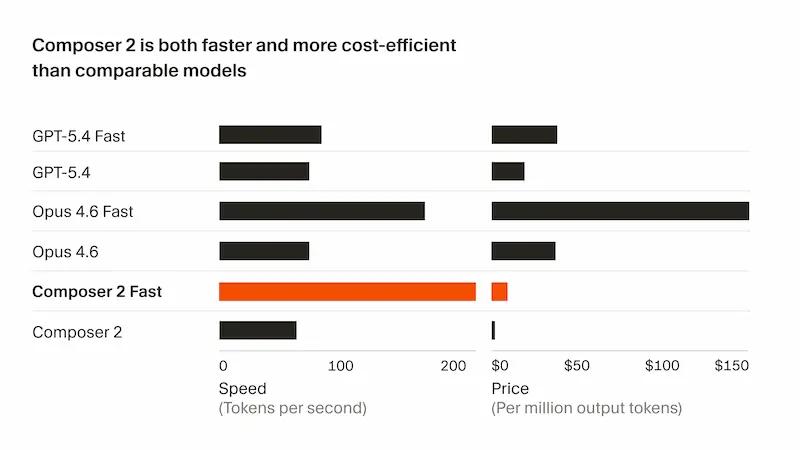
Since Composer 2 is essentially a fine-tuned version of Kimi K2.5, using Kimi directly would yield the same results.
Previously, there were always accusations that Chinese companies steal foreign technology. This incident proves that Chinese companies can also export technology. Those foreign star companies are secretly using Chinese technology.
Reflecting on last week, Kimi’s founder, Yang Zhilin, received an invitation from Jensen Huang to speak at the Nvidia GTC conference, representing the only Chinese large model company.
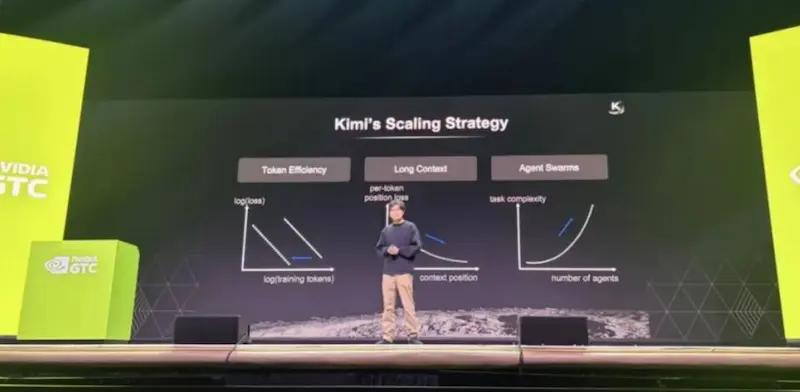
He presented the recently published paper “Attention Residuals.”
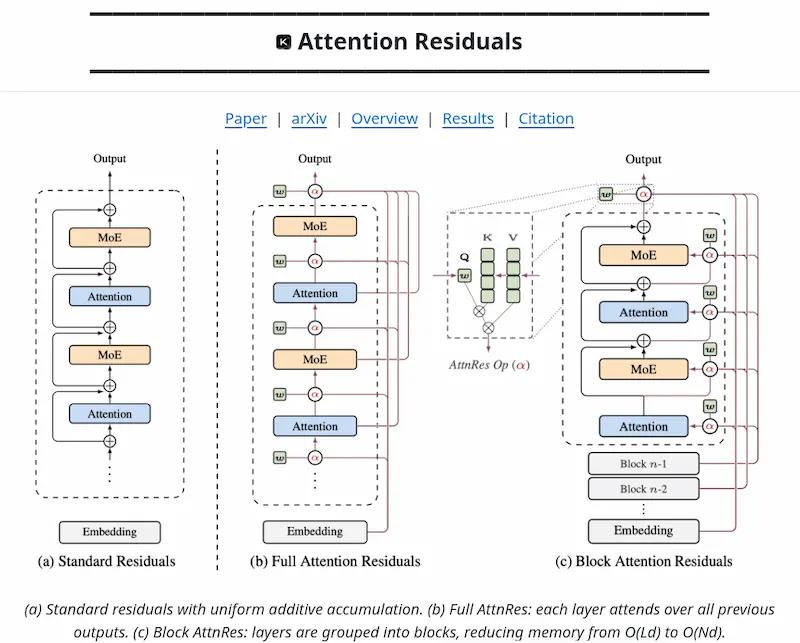
This new technology reportedly significantly enhances the reasoning capabilities of large models.
My thought is that we should have confidence in domestic large models; they can be safely used in daily work. The gap between domestic large models and foreign flagship models is continually narrowing, and they are more cost-effective.
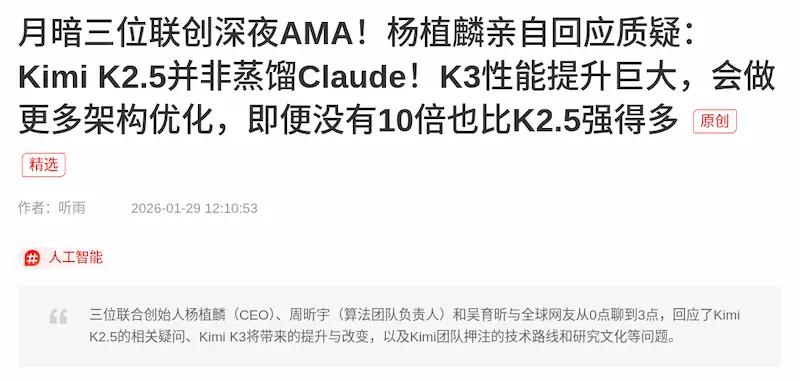
According to Yang Zhilin, the next K3 model will show significant performance improvements, potentially even exceeding K2.5 by a large margin. We can look forward to it.
Comments
Discussion is powered by Giscus (GitHub Discussions). Add
repo,repoID,category, andcategoryIDunder[params.comments.giscus]inhugo.tomlusing the values from the Giscus setup tool.